Circling the Globe
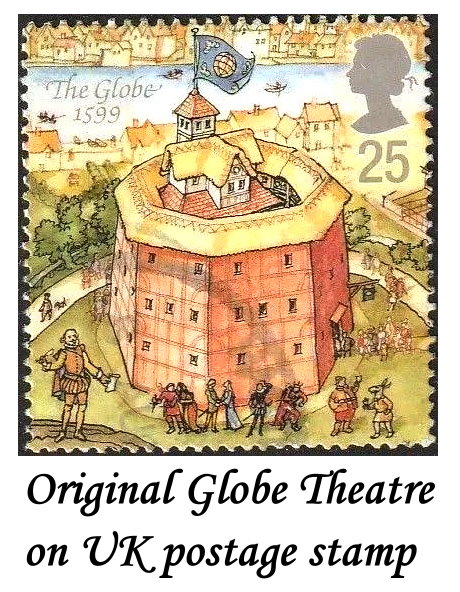
29 June—On this day in 1613, the Globe Theatre, in Southwark on Central London’s culture-craving South Bank (of the Thames) burned down to the foundation during a performance of Shakespeare and Fletcher’s The Famous History of the Life of King Henry the Eighth, also known as All Is True and commonly known as Henry VIII, after a theatrical special-effects cannon signaling King Henry’s entrance onstage ignited the theatre’s thatched roof.
It would appear the 14-year-old wooden theatre’s state-of-the-art sprinkler system wasn’t working that day. In all events, no fatalities were reported, so presumably there were none. But there were some injuries. One man’s breeches caught fire, but it was alacritously extinguished with a bottle of beer. Or ale.
The identity of the man in the hot pants isn’t known, so we can’t say if he was a culture-vulture plebeian penny stinker (a.k.a. groundling) standing—but not sitting, as there were no seats provided—in the uncovered yard Americans now call the orchestra and Brits call the stalls, a wealthy Lord’s Room patron in what are now called boxes or private galleries, or something in-between. Nothing else is known about the unfortunate conflagration.
The Globe Theatre was rebuilt on the existing foundation and was able to (re)open only a year later, in June 1614, because the owners and builders didn’t have to contend with planning and zoning officials, building inspectors, or labor unions. Peter Streete, more or less the general contractor, took the precaution of putting a tiled roof on the new Globe rather than a thatched one.
The rebuilt Globe, along with other London theatres, was closed by the Roundhead Puritans who had usurped power in the 1642 Civil War. It was torn down in 1644 to make way for—wait for it—affordable housing. You’d think the Roundheads were Connecticut Democrats.
A modern Globe Theatre—an “academic approximation of the original design, built using traditional methods and materials, with some concessions to modern safety regulations”—opened in 1997 just down the road from the Elizabethan one. All told, it took 27 years . . .