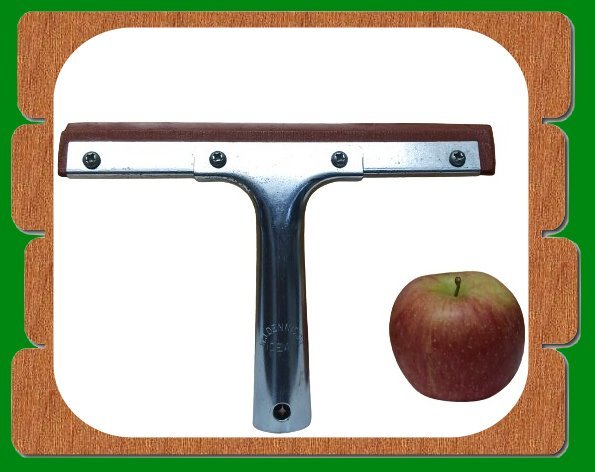
Apples, oranges, and glass
27 November—It’s not generally known that when French Post-Impressionist painter Paul Cézanne (1839-1906) started to churn out his numerous still-lifes of fruit he was suffering from fructophobia—fear of fruit.
Moreover, it’s well known that Cézanne especially liked to paint apples; critics have observed that he painted pommes, as he would have called them, in his still-lifes with a particularly vibrant albeit tender intensity of line, mass, and color. So it’s surprising even to the cognoscenti that Cézanne suffered from a rarer and even more debilitating malady called malusdomesticaphobia. Don’t bother looking that up, by the way—it means fear of apples.
Anyway, Cézanne probably wasn’t a masochist. It’s just that his fructuous still-lifes were fructive to his finances. Indeed, they sold rather well for the time, but nothing like the $137.8 million one of his mountain pictures recently fetched at Christie’s. So obviously he couldn’t afford not to paint fruity still-lifes.
But simply being near the fruit—especially the apples—made the artist absolutely miserable, sad, hopeless, angry. Being self-aware and au courant, Cézanne realized he was clinically depressed. So he caught a train to Vienna and consulted with up-and-coming (but not yet fashionable) young Dr. Sigmund Freud.
Long story short, thanks to his sessions on Dr. Freud’s couch, Cézanne was able to remember that when he was un enfant (a child) he had disturbed a caterpillar that was enjoying the apple he himself was munching on. Petit Paul wasn’t one for sharing, especially with little green caterpillars. Even worse, this little caterpillar was smiling at him as it munched away. It likely would have metamorphosed into a tiger swallowtail papillon. Had he not squished it.
Dr. Freud first tried operant conditioning—positive reinforcement. But that didn’t work, because the little green caterpillar was always there in poor Paul’s subconscious, smiling as it nonchalantly ate his pomme.
As a last-ditch effort to get Cézanne back on track to earning beaucoup d’argent (big bucks) before there were antidepressants, then, Dr. Freud came up with the novel (and brilliant) expedient of putting a big pane of glass between the fruit and the artist. And—wouldn’t you know?—it worked. Leave it to Siggy. How many shrinks can think outside the box?
Suffice to say, after a few operant fruit-behind-the-glass sessions Paul was cured. Of course. But that posed the new problem of cleaning the glass after it had been bombarded by all the nasty bugs and other fruity detritus getting stuck on it as the fruits—especially his beloved apples—were patiently posing for the enthusiastic artist. Full disclosure, there was also some of Paul’s stuff on the glass. But Mme. Cézanne cleverly solved the problem with some Fenêtredex spray and a squeegee. That’s all it took.
So happily productive Paul Cézanne simply had to show his gratitude (and affection) to his dutiful (and clever) wife, Hortense. But even though she posed for him quite often (there are some 29 existing portraits of her; in all but one she’s fully clothed), she didn’t really appreciate his Post-Impressionist style. So he painted this trompe l’oeil still-life for Hortense to commemorate her thoughtful nettoyage de la fenêtre aux pommes; the frame is part of the trompe, by the way, a brilliant fillip of reality.
Cézanne seldom signed his works. But as far as we know, this is the only trompe l’oeil he ever painted—of anything. And it’s in the archive of The Litchfield Monitor . . .