All about the Doge
16 February—The Musk-Trump Department of Government Efficiency, commonly known by its acronym DOGE, would better be called the Department of Government Economy. Efficiency and economy are not synonymous and in fact often work to the detriment of one another. DOGE’s official, slick government website is full of hype, lies, and links to X—doubtless to lure the curious to Musk’s own website, which can thus squeeze more money out of advertisers as it gets more internet visits.
It reeks of self-dealing, like Trump’s brilliant idea of making Gaza the Riviera of the Middle East. His intention, of course, is for his mob to develop and run the resort. Government pays, he profits. So what else is new?
Back on topic, from DOGE we go to Dogecoin. According to its website, it’s “an open-source peer-to-peer digital currency, favoured by Shiba Inus worldwide.” Musk owns what he calls “a bunch” of it, along with other environmentally deleterious cryptocurrency.
So why is it called Dogecoin? Well, it’s said to have been created by a couple of software engineers at the end of 2013 as a joke. Long story not quite as long, then, “doge” is really an intentional misspelling of “dog.” The dog in this instance is or was Kabosu, who died last May at the age of 18. Kabosu was a Shiba Inu, the breed referred to on the website, a Japanese hunting dog that looks kind of like an Akita. As if that helps.
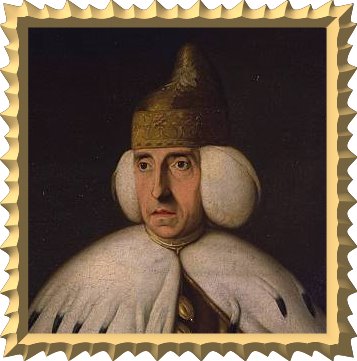
But what’s a doge that’s not a misspelled dog? For that we have to go to Venice. “Doge” is Venetian Italian for “duke.” (From Latin “dux,” meaning “leader,” from which Italians get “duce” and we get “duke.”) The Doge of Venice was the chief magistrate, once the highest, most powerful official in the Republic of Venice, which lasted from 697 to 1797, when Ludovico Manin abdicated after Napoleon had conquered the city.
The Doges of Venice were elected for life by Venetian nobility through a process that for political (i.e., factional) reasons became even more complex—make that convoluted—than ranked-choice voting. Doges were heads of state and heads of the thriving Venetian oligarchy. Originally very powerful, their authority came to be limited by the patrician legislature. So even though they remained influential, as oligarchs tend to be, by the 15th century the Doges had little real power and the position was largely ceremonial and symbolic.
It’s worth noting that after Doges died, their tenure was reviewed by a commission of inquisitors. If the late Doge was found to have been guilty of corruption or misconduct, his estate was fined. The sins of the fathers, and all that. Something to be said for it with life-tenured federal judges, for instance.
If you’re interested, this is how the Doge of Venice got elected:
Thirty members of the Great Council, chosen by lot (drawn by a boy chosen by the youngest councilor), were reduced to nine; the nine chose 40 and the 40 were reduced by lot to 12, who chose 25. The 25 were reduced by lot to nine, and the nine elected 45. The 45 were reduced by lot to 11, and the 11 chose the 41 who elected the doge. Election required at least 25 votes out of the 41.
There’s nothing in the Constitution to prevent the United States Senate and House of Representatives from doing something as stupid as that . . .