15 November—As I intimated after yesterday’s observations about the disgusting, reprehensible Princess of Wales (The shameful old fartess), here are my observations about the United Nations COP26 climate extravaganza in Glasgow. To sum it up, what a bloody waste of time, energy, money, and whatever else you can think of.
And don’t fail to consider the humongous global warming all the airplanes and limousines that got the bigwigs and smallwigs to their soporific conferences must have caused by spewing megatons of carbon dioxide into the atmosphere. Not to mention all the ginormous global warming all the bigwigs and smallwigs attending the sorporific conferences must have caused by spewing megatons of methane out their rear and front orifices into the atmosphere.
COP26 was no more than a charade, typically staged to divert attention from the serious political problems troubling virtually all of the participating nations.
So what was accomplished? One of the COP26 functionaries, pontificating from Glasgow, boasted on left-wing news that he was proud he could tell his children that COP26 “achieved something for their future.” Yeah, right.
Here are the COP26 website’s own bullet points about the blessed event, posted yesterday, gone today:
- COP26 ends with global agreement to accelerate action on climate this decade.
- Two weeks of intense negotiations finally complete the Paris Rulebook.
- For the first time COP agrees position on phasing down unabated coal power.
- The Glasgow Climate Pact caps two years of diplomacy and ambition raising.
Gosh, wow, golly gee! And huh, come again? A fortnight of what ukcop26.org calls (or called) “intense talks,” after what the world press calls “wrangling,” came up with “a consensus to speed up the pace on climate action.” It agreed to “revisit and strengthen current emissions targets to 2030.” It planned for yet another “yearly political roundtable to consider a global progress report and a leaders summit in 2023.” There were also commitments to “significantly increase financial support . . . as developed countries were urged to double their support of developing countries by 2025.”
All that amounts to nothing. Zilch. Zero. Bupkes. Sweet F A.
Look at the words of COP26’s own statement: intense talks, consensus, planned, political roundtable to consider, leaders summit, commitments, urged to significantly increase financial support. The last one means the United States will be hit up to bankroll this United Nations crap just as we’ve been doing for seven decades.
COP26 is nothing more than a gelatin-clad agreement that nobody outside of a cadre of activists and dreamers takes seriously. Especially the touted participating world leaders who reluctantly—for PR purposes—pledged to do their part, with no intention of doing a bloody thing. Because everyone but climate activists knows that you just can’t fuck with Mother Nature.
But all the news from Glasgow isn’t bad. For Glasgow. Because next year the United Nations will be taking its alarmist dog and pony show to Cairo. COP27 will be doing the same old same old in the shadow of the pyramids and the Sphinx. Just another excuse for the politicians of the world to see other parts of the world at taxpayers’ expense.
Do cities bid on the COP conventions like they do for Olympic games? Does the United Nations make a profit from them?
14 November—COP26 has finally concluded and is leaving Glasgow with little more than the unmistakable redolence of methane and the detritus of the horde of climate change activists. And lots of bills.
Without doubt, the most newsworthy event at the United Nations’ latest wasted, counterproductive effort at positive publicity was when the 78-year-old President of the United States, Joe Biden, allegedly entertained the 74-year-old Princess of Wales, Camilla Parker Bowles Windsor, with a virtuoso flatulent performance described by HRH as “long and impossible to ignore.” Evidently, Camilla hasn’t stopped talking about it.
Camilla, of course, supposedly being a lady before she started screwing around with heir apparent Prince Charles—who at the time was married, however unhappily, to Diana Spencer—would never fart, even when by herself. Nor, it must be said, should Camilla have carried on about POTUS’ embarrassing public flatulence, if indeed it happened. It showed her to be totally devoid of tact and grace. But, then, she is a royal, after all, if only by injection.
Horses in the Royal Mews are not allowed to eat or drink before performances, lest they embarrass their riders—which, happily, they sometimes do anyway. The Duchess of Cornwall—one of Camilla’s many other titles by marriage—probably has a cork stuck up her own stuck-up arse [that’s a British ass], along with a hot poker, to preempt her public flatulence. They should put one in her mouth, too. Two orifices, same discharge.
This was intended to be a short digression, but my utter disdain for the House of Saxe-Coburg and Gotha, which changed its name to the House of Windsor during World War I, got the better of me. No apologies.
My utter disdain for COP26 tomorrow . . .
13 November–Here are some suggestions for a new Wokemon game:
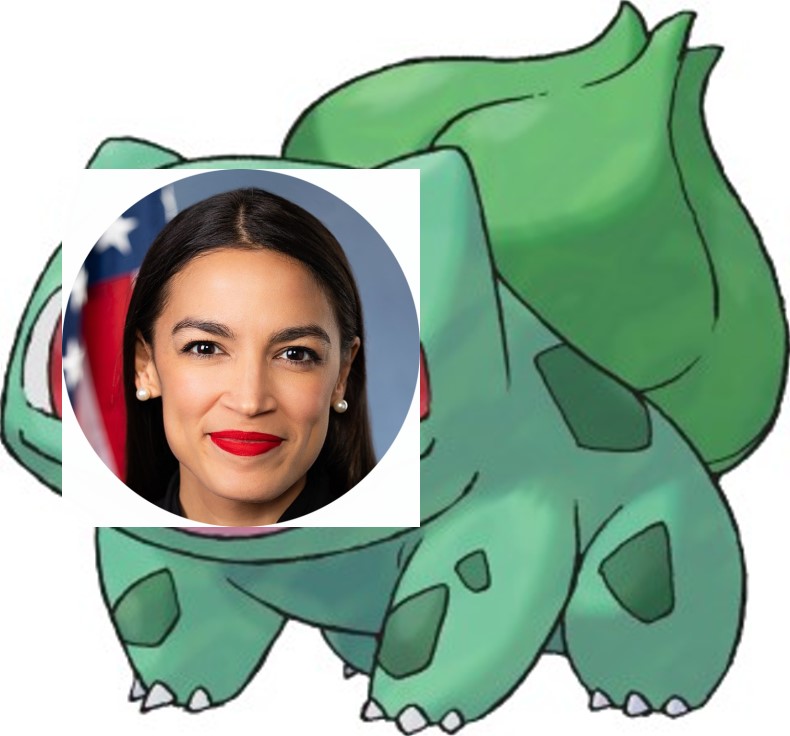
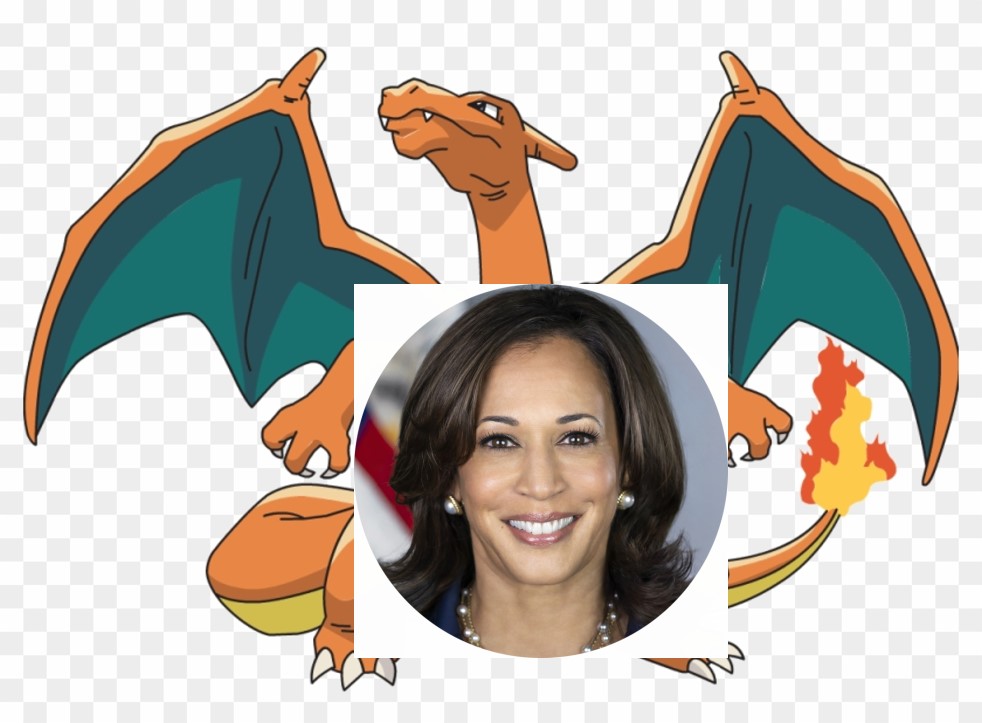
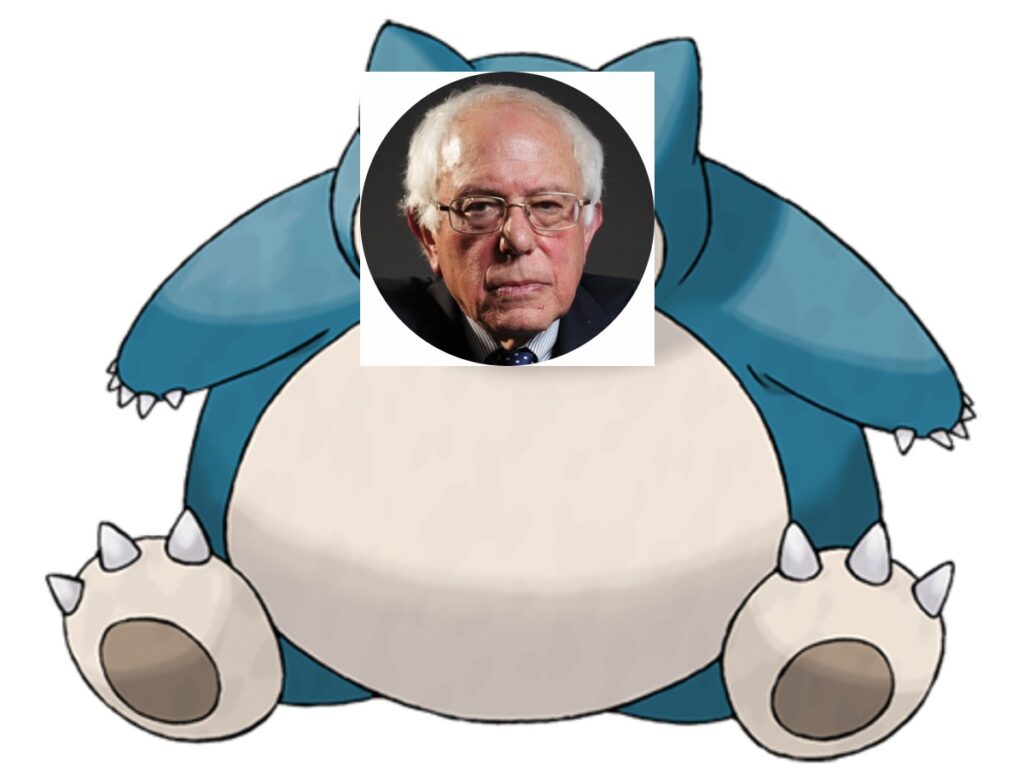
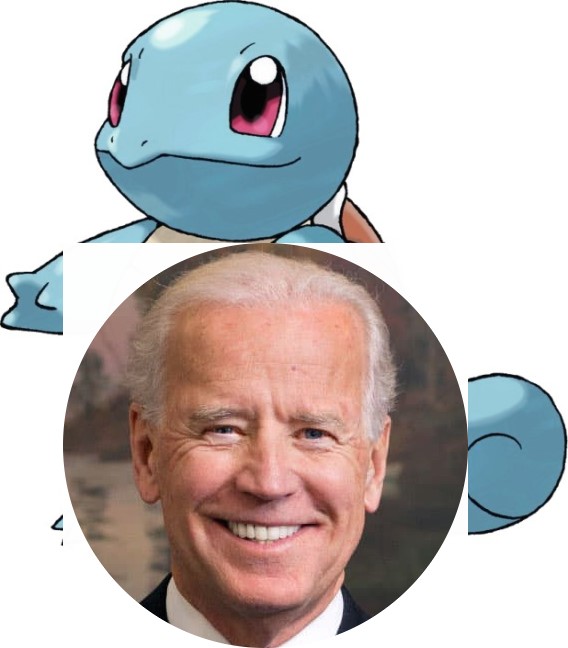
12 November—Believe it or not, the sacrosanct, sanctimonious, superfluous Borough of Litchfield doesn’t have a seal. Here are two suggestions. The round seal doesn’t need explication; the Latin in the oval seal means “Our shit doesn’t stink and you better believe it.” Hey, it’s the Borough!


11 November—About a decade ago, the family’s former GP, splitting his retirement between the south of England and the Costa del Sol, emailed me this perceptive piece about our beautiful language that he had gleaned from the internet. It’s still there. He’s not.
There‘s a philological explanation for it all. Which I won’t bore you with. Just enjoy the orthographic vagaries.
1) The bandage was wound around the wound.
2) The farm was used to produce produce.
3) The dump was so full that it had to refuse more refuse.
4) We must polish the Polish furniture.
5) He could lead if he would get the lead out.
6) The soldier decided to desert his dessert in the desert.
7) Since there is no time like the present, he thought it was time to present the present.
8) A bass was painted on the head of the bass drum.
9) When shot at, the dove dove into the bushes.
10) I did not object to the object.
11) The insurance was invalid for the invalid.
12) There was a row among the oarsmen about how to row.
13) They were too close to the door to close it.
14) The buck does funny things when the does are present.
15) A seamstress and a sewer fell down into a sewer line.
16) To help with planting, the farmer taught his sow to sow.
17) The wind was too strong to wind the sail.
18) Upon seeing the tear in the painting I shed a tear.
19) I had to subject the subject to a series of tests.
20) How can I intimate this to my most intimate friend?
10 November—Tanya Chutkan, a United States District judge in the District of Columbia, has just told Donald Trump that he and his ass-kissing cronies can’t use the doctrine of executive privilege to conceal all their evil deeds. Bravissimo, though it’s no surprise. So here’s a brief history of executive privilege in the United States to bore you:
First, executive privilege—the right of the president and other members of the executive branch to maintain confidential communications under certain circumstances and to resist certain subpoenas and oversight by the legislative and judicial branches of government—isn’t mentioned at all in the Constitution. But the Supreme Court has ruled that executive privilege derives from the separation of powers, which, while that doctrine also isn’t specifically mentioned in the Constitution, is clearly implied in several articles and amendments.
SCOTUS generally tends to come down for executive transparency. But it can always change its mind. Most litigation over executive privilege is negotiated and settled anyway. And, lest we forget, cracking executive privilege usually is for political rather than legal or altruistic reasons, despite what the pols may claim.
The first president to invoke executive privilege was George Washington. Of course. He and his cabinet used it twice: first, in 1792, to keep the House of Representatives from discovering details about a disastrous military loss to Indians (a.k.a. Native Americans); second, to essentially keep the details of the Jay Treaty between the United States and Great Britain secret, if you can believe it. Washington relented in both cases, but, as in so many things, set the precedent. For better or worse. And that was before it was called executive privilege.
In 1807, Thomas Jefferson tried to avoid testifying at his former vice president Aaron Burr’s trial for treason. Jefferson had in fact had Burr arrested. Chief Justice John Marshall, who presided at the trial in Richmond, Virginia, ruled that the President was subject to the same laws as everyone else. Jefferson didn’t testify, but he did “voluntarily” provide documents sought by Burr’s lawyers. Burr, who was Tapping Reeve’s brother-in-law and student (as if anybody cares), was acquitted.
Andrew Jackson told the Senate where to get off in 1833 when it wanted to see a list of financial advisors. The Senate censured him, but Jackson never gave up the list.
Grover Cleveland refused to give Congress documents relevant to presidential appointments in 1885. And Theodore Roosevelt refused to give the Senate documents about antitrust prosecution of U.S. Steel. “The only way the Senate or the committee can get those papers now is through my impeachment,” he insisted. He didn’t produce and it didn’t impeach. Well, the House had to charge first.
In 1954, Dwight Eisenhower told Sen. Joe McCarthy and his red-baiting committee, “I will not allow people around me to be subpoenaed.” Eisenhower used executive privilege 44 times. And McCarthy fell. Deservedly so. The term “executive privilege” came to be used during the Eisenhower administration, by the way.
Richard Nixon invoked executive privilege in 1973 to cover his ass in the scandalous Watergate screw-up, but in 1974 SCOTUS ruled that it couldn’t be used to withhold material sought for a criminal proceeding.
Ronald Reagan invoked executive privilege three times.
Willy Clinton misused executive privilege 14 times in 1998 (about Monica Lewinsky, of course), but was told where to go by SCOTUS.
George Bush Jr. (a.k.a. Bush 43) copped executive privilege six times and Barack Obama took seven years to negotiate a settlement about the Fast and Furious fiasco.
As for Trump, we can only hope that he and his horde of culpable sycophants are forced—by SCOTUS, if necessary—to turn over every single incriminating document generated in his disgusting lifetime . . .
9 November—It didn’t take long for the pack of predatory ambulance chasers to pounce after Friday’s catastrophic stampede at the Astroworld Festival rap concert in Houston’s NRG Park. Were the bodies of the dead victims even cold when the always ready, always eager to sue shysters solicited guaranteed lucrative new business from living victims and families of the deceased. We read about the first lawsuits on Saturday.
It’s not that nobody should be made to answer civilly and even criminally for the Astroworld catastrophe, but couldn’t the ambulance chasers—who are first and foremost out for themselves—have allowed the families and victims at least a little bit of time to grieve and recover?
It brings to mind a recent comic strip, with Garfield watching television. “And now tonight’s feature film,” the text in the first two panels reads, “The Giant Bloodsucking Leech Versus the Personal Injury Attorney.” In the last panel, Garfield muses, “This one could go either way.”
8 November—When the Swedish termagant is right, she certainly is right. In addition to rousing the useless demonstrations of the climate claque with the raucous “What do we want? Climate justice! When do we want it? Now!” dialogue, Greta Thunberg aptly characterizes the accomplishments of COP26 in Glasgow as nothing but “Blah blah blah, blah blah blah.”
That’s because not only is the latest United Nations dog and pony show on climate change all about gas in the atmosphere, it’s full of gas and nothing but gas around the conference tables. And that’s because the gassy participants from all over the world know—or should know—full well that you simply can’t screw with Mother Nature.
They’re first and foremost trying to defensively divert attention from the fact that they’ve all been asleep at the wheel and haven’t done a bloody thing to deal with natural climate change, which happens now to be in the global warming cycle. Not until now, anyway.
Whose fault is it, for instance, that intensive building development has been going on dangerously close to sea level all over the world for millennia? Didn’t it occur to any of the heedless monarchs, developers, or authorities until recently that sea levels rise and fall?
Earth has been experiencing cycles of cooling and warming since the beginning, even before plant and animal life, let alone industrialization and fossil fuels. Only the most dyed-in-the-wool climate morons refuse to admit that, while blaming it all on politically expedient irresponsible industrial scapegoats.
Anthropogenic climate change is politically correct because it’s touted as the consensus of divers alarmists—politicians, educators, and scientists—who choose to ignore the lack of true, reproducible scientific evidence to prove their thesis. But that doesn’t matter at all. If their purpose is served by fake science, what the hell. Go with it.
In fact, man-caused climate change is largely a fiction created by opportunistic political whores desperate to find ways to keep the gullible public from realizing that the pols aren’t actually doing anything worthwhile to justify their election . . .
7 November—“What do we want? Climate justice! When do we want it? Now!”
Guess who has been leading that theatrically uproarious provocation of impatient unreasonables in Glasgow. That’s right, it was obnoxious, histrionic teenage harpy Greta Thunberg, who miraculously manages to be wherever global warming is being discussed by VIPs. Truth be told, the Swedish spitfire is every bit as good as Donald Trump at rousing the rabble, although her well-intentioned if misguided suckers certainly don’t appear to be anywhere near as dangerous as Trump’s ill-intentioned malfeasant morons.
The UN’s COP26 event in Glasgow is a joke, of course, merely an opportunity for over 120 international heads of state like old Joe Biden from the USA and young Boris Johnson from the UK to bullshit their way into headlines—which they both do very well. To their credit, Vladimir Putin of Russia and Xi Jinping of China haven’t wasted their time (or dignified the event) by visiting Glasgow, instead sending lesser functionaries to fall asleep during the endless sessions.
If anyone is interested, by the way, COP26 stands for Conference of the Parties in its 26th year. Couldn’t they come up with a better name? So what has it accomplished in all that time? Worthless agreements and promises, to be sure. But nothing, really, beyond confirming the undeniable fact that Earth’s climate is changing. By whatever means.
To her credit, Greta Thunberg has lambasted the UN-brokered climate summit for being just another public relations exercise. She certainly knows what she’s talking about there . . .
6 November—Brigitte Ruthman reports in this morning’s Republican-American that a rookie state trooper, Romello Lumpkin, was caught on camera stealing a 10-round magazine for his Sig Sauer service pistol from the Newington Gun Exchange. Lumpkin graduated from the police academy in August and is assigned to the Hartford barracks.
Given the video evidence, the details of the incident evidently aren’t in question, but the state police are conducting an internal investigation, whatever that means. Twenty-six-year-old Lumpkin wasn’t arrested and remains on the job. That’s because the store management refused to press charges against the young cop.
What’s particularly interesting and curious is that the gun-shop management, after contacting Lumpkin directly and getting back the stolen magazine, reported the incident to the state police but—to repeat—have refused to pursue an arrest. They just want Lumpkin to keep away.
Lumpkin reacted as might be expected when confronted by a Newington policeman. The rookie claimed it was all a misunderstanding, even though the video clearly shows intent. But I mustn’t say that because in the circumstance of no arrest or admission of guilt everything must remain alleged.
It’s entirely understandable that the Newington gun dealers didn’t press charges after reporting the theft of a $40 item to the authorities. They’d probably do the same for anyone committing a Class D misdemeanor, the least serious kind. Putting the fear of the lord in the perp was good for PR and business, especially, one would expect, with other cops.
What I don’t get is why Lumpkin (allegedly) lifted the magazine in the first place. Anyone with a modicum of intelligence, perception, and experience—especially a cop—would know that CCTV cameras were virtually everywhere—and especially in gun shops. Didn’t they teach him that at the police academy?
Even if Lumpkin had debts, he had been paid almost $1,000 a week while at the police academy and almost $1,200 upon graduation. Plus fantastic benefits, of course. So why would he risk his career for a $40 pistol magazine of all things? Can we trust this cop’s judgement?
And it must be noted that in this unconstitutionally anti-gun state, as of 2014, the 12-round magazine that Romello Lumpkin actually paid for would be illegal for anyone not in law enforcement and a few other vocations to purchase or possess outside of one’s own residence . . .
5 November—With this year’s election out of the way, consider what actually gets candidates elected. Here are many of the variables to consider, presented in alphabetical order, with overlapping and implicit repetition.
They include: advertising; appearance of candidates; associations of candidates; boredom; bribes; campaigns overall; credentials; debates; distrust of opposing candidates; door-to-door; election fraud; endorsements by press and others; experience; family connections and reputation; fear; friends in the right places, including but not limited to voters; gerrymandering; giveaways; hope (which springs eternal in politics).
Impatience; influence; intelligence of candidates and campaigns; intelligence gathering (spying); knocking copy, true or false; lies; location; luck; mailings; money; opposition; paid workers; party affiliation; payoffs; perception; personal appearances; personality; polls; presentation; promises; record; reputation; scandal; signage; spending; threats; time for a change; timing; trust; volunteers; voter suppression.
Does any one of those factors determine the victor and loser of any election? Of course not. But most play a part to a greater or lesser extent. And, notwithstanding allegedly expert polling, predicting an election (or referendum) result is as much art as science—and not very reliable.
Trump’s victory over Clinton in 2016 is a prime example. Few pollsters gave Trump any chance at all. And he spent only about half of what she spent. (And, of course, lots of his spending was with his own companies.)
Newspaper endorsements are generally an ego trip for editorial boards and pretty well ignored by voters. I remember, for instance, back in the good old days when the Waterbury Republican, as it was then, endorsed a liberal Democrat for a seat in the Connecticut General Assembly over a conservative Republican. Twice. And the Republican won hands down both times.
Do people actually read political mailings before they toss them? And if people do read the mailings, do they take the campaign verbiage—most of which is meaningless clichés—seriously?
And, according to the blessed experts, lawn signs—usually called yard signs around here—have minimal influence on elections. But, like baseball caps and sweatshirts, they identify people with groups. And people have to identify with groups and show their friends.
All things considered, then, the results of an election boil down to nothing more than good old-fashioned luck. Am I right or am I right? And the candidate who gives out dark chocolate bars . . .